

The FINANCIAL — JSC Healthy Water (“Tskali Margebeli”), the leading Georgian water producer in the country, plans to enter the Russian market later this year. The company had a 10% increase in sales in 2012 and achieved success in its target markets of Kazakhstan and Iran.
Representatives of alcohol-free beverage companies recently joined together against obligatory marking. “I do not want the current licence for procuring mineral waters, which has existed for 25 years, to be rewritten. Together with that, stating a marking fee on non-excise goods would negatively impact on the business environment,” Avtandil Svimonishvili, General Director of JSC Healthy Water, told The FINANCIAL.
In 2013 the company will work on developing its existing export markets and do its best to maintain the trust of its Georgian customers and even exceed their expectations.
“They say that Nabeghlavi is better than any other mineral water and that is not just another statement; the superiority of Nabeghlavi is evident in the volume of its sales,” Svimonishvili said.
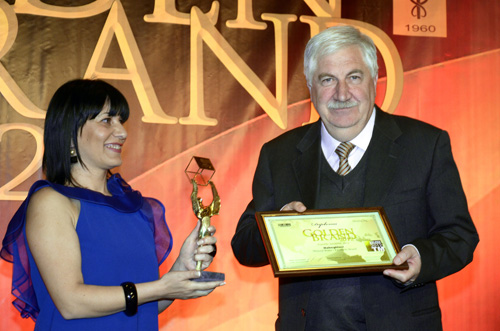
“As a Golden Brand Awards winner for the 7th time in a row, I dare say that Nabeghlavi is a gold standard for mineral water – in equal parts tasty and healthy,” he said.
Q. How would you evaluate the year 2012 for your company?
A. 2012 was a successful year for Nabeghlavi. We carried out many interesting projects last year. I would highlight the achievements of Marneuli Food Factory, which is financed by Nabeghlavi. The distinguishing feature of our products is that they are only made from local raw materials and their main supplier is Marneuli Agro. It introduces new, ultra-modern technologies on an annual basis and is based on the principles of the agriculture sector. It should be noted that 100% Georgian products have largely replaced imported goods. Two of our special products – tomato paste and cucumber pickles – have especially gained consumer trust. New technologies that were introduced in 2012 will allow the company to offer various new products in the future too.
Q. By what percentage did you increase sales?
A. We sold 60 million litres in 2011. In 2012 we had a 10% sales increase. That is a very good result considering the current state of the competition. It means that we are managing to maintain our position.
Q. Which new markets did you enter in 2012?
A. Entering a new market cannot usually be accomplished in under a year. It generally requires a two to three year timeframe for all the preparation, negotiations and other undertakings. In this regard I would distinguish the Kazakh market, which was our main target. We added our neighbour Turkey’s market to our list of export countries. Selling water in Turkey is very difficult, as a result we are pleased to have entered the market. We found new contacts in the Baltic States which is also very important. So we expect dramatic changes in these countries in the next few years. The list of our export countries at the moment comprises: Tajikistan, Cyprus, Azerbaijan, Ukraine and others.
Q. What impact did the political changes in Georgia have on your business?
A. We are a Georgian-Swiss company. One of our strategic partners is EBRD. We are producers, we operate in the business sphere and do not interfere in politics. Accordingly, the political changes have yet to affect us.
Q. Representatives of alcohol-free beverages recently joined together against obligatory marking. What are your expectations – will the new government meet your demands?
A. I would like to point out that this tax bill was initiated by the previous government. We have stated our position regarding this issue many times already. We have presented the argument for why we do not agree with the initiative to state a marking fee on non-excise goods. The main argument was that the fee would not affect the state budget per se but would affect the accounts of private companies. In addition, introducing a marking fee would increase the technical side of our workload and would have a further negative effect on the competitiveness of fresh water. We believe that the Government will share our views and come to a mutually beneficial decision.
It should be noted that this fee may coincide with a possible tax increase on the extraction of mineral water. Altogether this will place the Georgian mineral water business in a difficult situation.
Q. After entering Canadian and US markets, you have been actively working on the Iranian market. Which stage of the process are you at?
A. We have been running bilateral negotiations with our Iranian partners for approximately three years on gaining permission to export products there. We have twice hosted Iranian experts and our efforts have finally paid off. The Iranian market is now included in our list of export markets. Exporting Nabeghlavi to Iran is a very big achievement and is just the start.
Q. There is growing financial focus on BRIC countries. How would you assess their potential and which, if any, of them are you targeting?
A. Out of the BRIC countries we are currently focused on the Russian market the most. We consider the rest of the countries as future prospects only. However, awareness of Nabeghlavi in Russia, as well as in the other BRIC countries, is low. Therefore it will require at least a few years to lay the foundation for entering those markets.
Consequently, we are requesting that the Government not increase payments in order for us to be able to adequately present Georgian products on new markets. Entering any new market is associated with financial risks for our company.
***
Ruling out the Russian market, we will mostly focus on developing our positions on the markets we are currently established in.
***
Q. What will be the main challenge for your company and Georgian business in general this year?
A. I wish for the current licence for procuring mineral waters that has existed for 25 years not to get rewritten. Together with that, stating a marking fee on non-excise goods will negatively affect the business environment. We wish to have a stable environment for business cooperation. Our main accent will be on developing our export markets.
***
We plan to have a 6-7% increase of sales.
***


